

Key Takeaways:
Financial Impact and Precision: Beyond technical support, Dr. Sheryl O’Shea manages EMIS reporting for 30 annual deadlines, ensuring data accuracy that is vital for maximizing the state funding that supports the district’s budget.
Proactive Infrastructure Management: The district focuses on strategic technology investments, such as leveraging federal E-Rate discounts for 50% off Wi-Fi upgrades and ordering Chromebooks early to bypass global supply chain delays.
Commitment to Safety and Security: Using state-funded grants, the technology department has implemented 24/7 network cybersecurity monitoring and is expanding campus camera coverage to ensure a secure environment for all students.
In the spring of 2025, a construction crew working near Lima accidentally cut a fiber cable providing Wi-Fi access to our district and many others. That incident gave our 21st century students an opportunity to step back in time to see what school was like in the 20th century, and it made something very clear: Technology impacts every aspect of our day, and Director of Technology Dr. Sheryl O’Shea is essential to our district running smoothly and achieving excellence.
One aspect of the district O’Shea touches that might not be expected is finances. As the EMIS (Education Management Information System) coordinator, she is responsible for making sure data ranging from test scores to career technical education to attendance is reported to the Ohio Department of Education and Workforce. That data has a major impact on the state funding we receive. Because only 13.94% of our FY26 funding comes from state sources, we want to make sure we receive every dollar that should be coming to us.
EMIS isn’t a once-a-year consideration, either. O’Shea said, “There are thirty EMIS deadlines throughout the year. Working with principals, counselors, teachers, and administrative staff, we are constantly improving the systems we have in place to ensure our data is accurate and reported in a timely manner.”
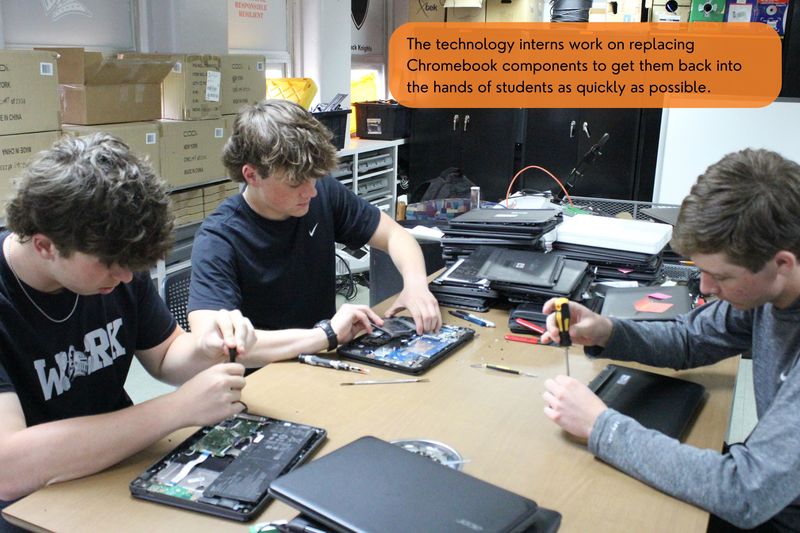
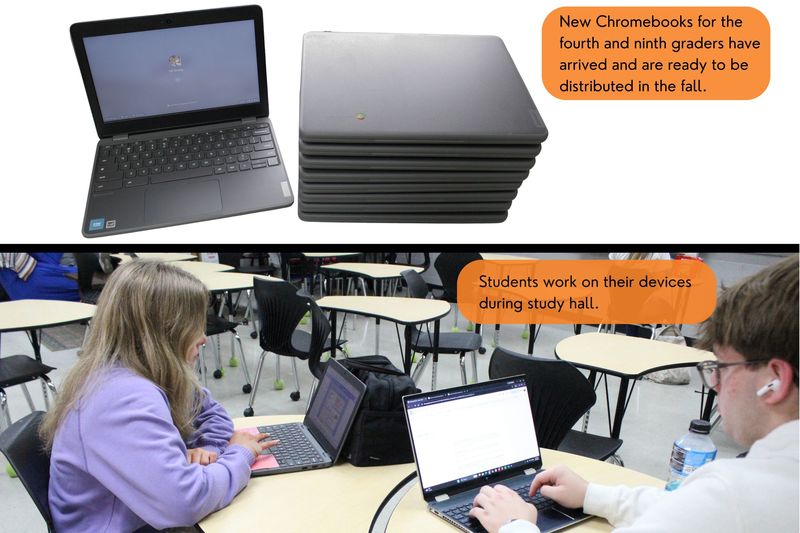
While EMIS accuracy allows us to maximize our finances, we must also strategically invest to maintain the level of technology necessary to serve our students and maintain their safety. Students entering fourth and ninth grade receive new Chromebooks, and O’Shea said, “We ordered our Chromebooks earlier than usual this year in anticipation of supply chain issues. Because we were proactive, we have already received all of them that we ordered while schools that ordered later are waiting on backorders.” Fourth graders will use their Chromebooks throughout the remainder of elementary and middle school, and freshmen will use theirs throughout high school. When those computers reach the end of their lifespan, spare parts are harvested to fix broken Chromebooks.
Chromebooks alone are important to the daily activities in our buildings, but without adequate Wi-Fi access, they are little more than paperweights. One of the projects O’Shea is currently tackling to improve our Wi-Fi is updating access points throughout the district because most are at least five years old. In addition to updates in the buildings, Wi-Fi upgrades are also being made for the football stadium and soccer field so scoring and statistics programs can keep up with the pace of the events held in those areas. Finally, because O’Shea applied for the federal E-Rate program, we are able to purchase our Wi-Fi access points at a 50% discount, and cost-savings in one area can help us improve other technology areas across the district.
When it comes to safety, cameras are used to monitor our campus 24 hours a day. Money from a safety grant we recently applied for and received from the state will be used to fill in some camera coverage gaps to keep students safe regardless of where they are before, during, and after school.
Cybersecurity also remains a critical priority for O’Shea. Utilizing a grant secured last year, the district implemented a network sensor program that provides 24/7 monitoring. The system identifies and neutralizes potential intrusions, ensuring our digital infrastructure remains secure from external threats.
With all the work being done in the technology department, even a little bit of help is appreciated, and that help comes in the form of three student interns who have been working for O’Shea since October as part of the Beyond VB internship program. Sophomores Caleb Mason, Matthew Puperi, and Lucas Steiner have been completing a variety of tasks, including fixing Chromebooks, unboxing and checking in the new Chromebooks, and learning skills related to aspects of technology across the district.
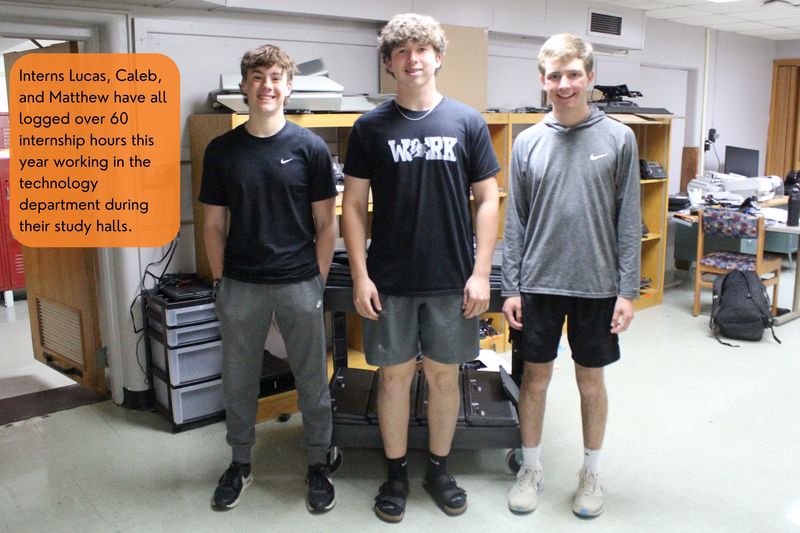
Steiner said, “I really like doing this because I’m helping Mrs. O’Shea and learning skills I can use in the future. Even if I don’t go into a technology career, I’ll still be able to use what I have learned in my personal life. I hadn’t ever considered a career in technology, but I have found being a technology intern very enjoyable.” With two years of school remaining, these sophomores have a prime opportunity to grow their professional résumés while supporting O’Shea.
While every department evolves, few face a landscape as rapidly shifting as technology. As digital infrastructure and fiscal responsibility become increasingly inseparable, we are grateful for Dr. O’Shea’s leadership. Her ability to balance security with economic efficiency ensures our district remains both protected and prepared for the future.
Check out what else is happening at the Van Buren Local School District:
Middle School ELA Teachers Receive HancockREADS Grant
Bridging History and Humanity: Bringing Lessons of the Holocaust to Van Buren
Hancock Youth Leadership Graduates Recognized