

Fuel is an important part of any school district.
When reading that sentence, most people are thinking about the propane and diesel fuel our buses need to transport our students to school, but Mrs. Chelsea Griffith has a different fuel on her mind when she comes to school every morning: food.
While food is nothing new to Griffith, since this is her fifth year working in our food service department, what is new is her role as Food Service Supervisor after serving as the elementary kitchen manager for the last two years. Along with the six other members of the food service crew (LeeAnn Kerr - MS/HS Head Cook, Raquel Ludwig - Elementary Head Cook, Rachel Baerlin, Melanie Buff, Kim Feasel, Tammy Patterson), Griffith and her team are responsible for serving approximately 500 lunches every day across the three buildings.
Why is providing fuel for students important? The CDC has found that students who eat fruit and vegetables one or more times per day are more likely to earn higher grades than those who do not. For that reason and based on National School Lunch Program requirements, every regular lunch served in our cafeterias offers a fruit and a vegetable in addition to the main course.
Griffith said, “Feeding students healthy meals not only helps them develop lifelong habits to make healthy choices, but it also helps students focus in school and improve their moods and behaviors.”
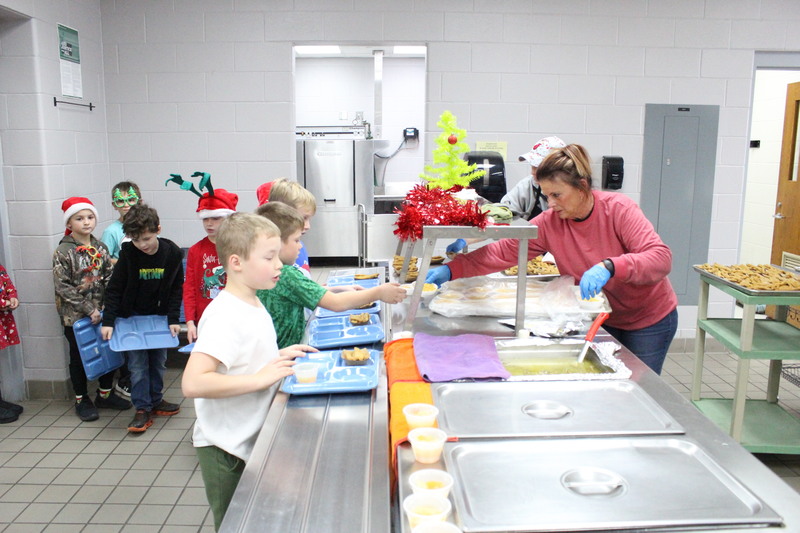
Desirable Lunch Options for Everyone
The variety of foods offered might have also changed since most of us were in school. Some of the main course offerings in the middle and high school in December included orange chicken with vegetable fried rice and an egg roll, a baked potato bar, and a chicken burrito bowl. In the elementary school, the menu includes childhood favorites like chicken tenders and spaghetti with meat sauce, but they also have some fun items like Froot Loop waffles to offer variety to students.
In order to choose the meals they will serve, Griffith and her team have entrees they test once per quarter over the course of the school year. When they evaluate the number of meals sold for each recipe at the end of the year, they keep the most popular entrees for the next year’s menu and eliminate the ones which don’t sell as well. The head cooks in each building also develop new entrees each year so they are continually improving offerings to students.
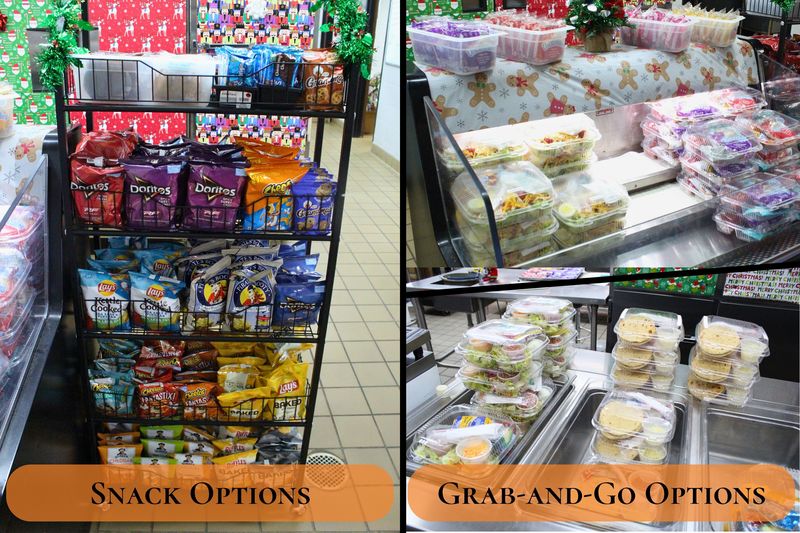
If the regular lunch option doesn’t appeal to students, they have other grab-and-go options: a peanut butter and jelly Uncrustable, fruit, vegetable, and milk; a variety of salads with a fruit, grain, and milk; or a pizza Lunchable meal kit with a fruit, vegetable, and milk. Regardless of what students eat, the focus is on providing students with options they will enjoy while getting the nutrients they need to do their best work at school.
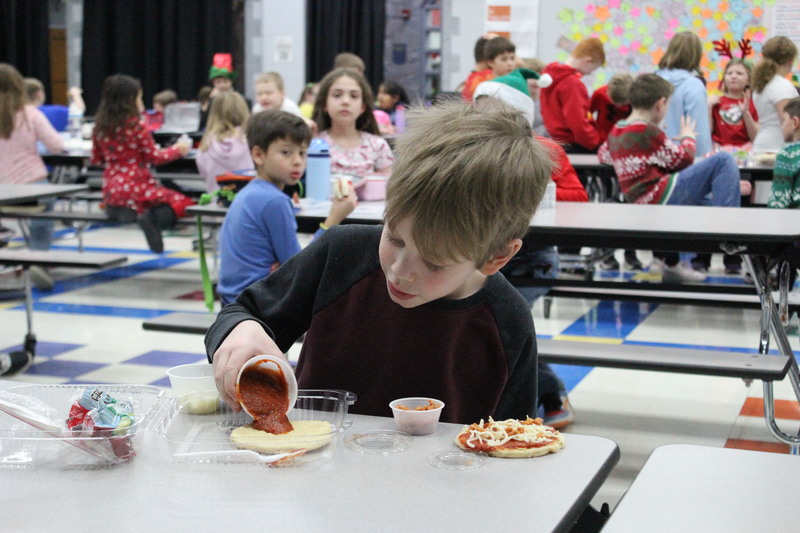
That isn’t to say, however, that there isn’t some room for snacks. Since snacks are not all created equally, the ones we serve must meet the National School Lunch Program Smart Snack Guidelines for calories, sodium, total fat, saturated fat, trans fat, total sugars, and other general nutrition standards. The items we offer meeting those guidelines (ice cream, cookies, chips, rice cakes, Izze and Sparkling Ice drinks, and more) are all available for purchase for $1.50 and ensure students’ eating habits are healthy while at school.
Options for Students Outside the Regular School Day
Consuming healthy food options puts our students in the best position to excel at school every day, but access to food is also important to our athletes and musicians who often spend hours at school beyond the regular school day. Those students who need to stay after school for an activity can purchase one or more of the grab-and-go options before their lunch periods end, put them in their lockers, and then eat them after school.
Another option that will be available to high and middle school students soon is a refrigerated food vending machine in the cafeteria. The goal is to put both breakfast items (whole-grain Pop-Tarts, for example) and after-school options in the machine to give students multiple ways to stay fueled before, during, and after school.
“As adults, we know we are busy, but it isn’t really any different for students. They have busy days at school and then have to go to sports and other activities, so we want students to have options that will give them the energy they need to keep going regardless of how late they need to be at school,” Griffith said.
Fueling Our Students for Success
If you are a parent or student wanting to find what is for lunch on a future date, menus are posted monthly on the school website in the News section. Regular and grab-and-go lunches cost $2.85 for grades K-5 and $3.10 for grades 6-12. Snacks can be purchased for $1.50, and extra milk costs $0.60. Students can pay in cash at school, or money can be added to students’ accounts using the PaySchools Central link under the For Parents & Students tab on the website (vbschools.net).
Every person in our district plays a role in achieving our mission of Building Thinkers, Building Experiences, and Building Connections. Just like the fuel in our buses provides the energy needed to transport students to school, Griffith and the food service team give our students the fuel they need to be successful each day.
Check out what else is happening at Van Buren Local School District:
High Performance, Low Cost: A Look at Our District’s Financial Efficiency
District Receives $20,000 STEM Grant from Pilot Travel Centers
Sign up to receive Knights in the Know